
Have you ever pulled on leggings or a swimsuit? Did you wonder why it snaps back after you stretch it? The answer is one small fiber. It’s called elastane.
Thank you for reading this post, don't forget to subscribe!You may know it by another name. In the U.S., people call it spandex. A popular brand version is called Lycra. All three names point to the same fiber. This fiber is the hidden hero in most stretchy sportswear.
So what is elastane really made of? Here’s the short answer. It’s a synthetic polymer. It is not a natural fiber like cotton or wool. Let’s break it down. We’ll cover the science. We’ll cover how it’s made. And we’ll cover why brands love it.
What Is Elastane, Exactly?
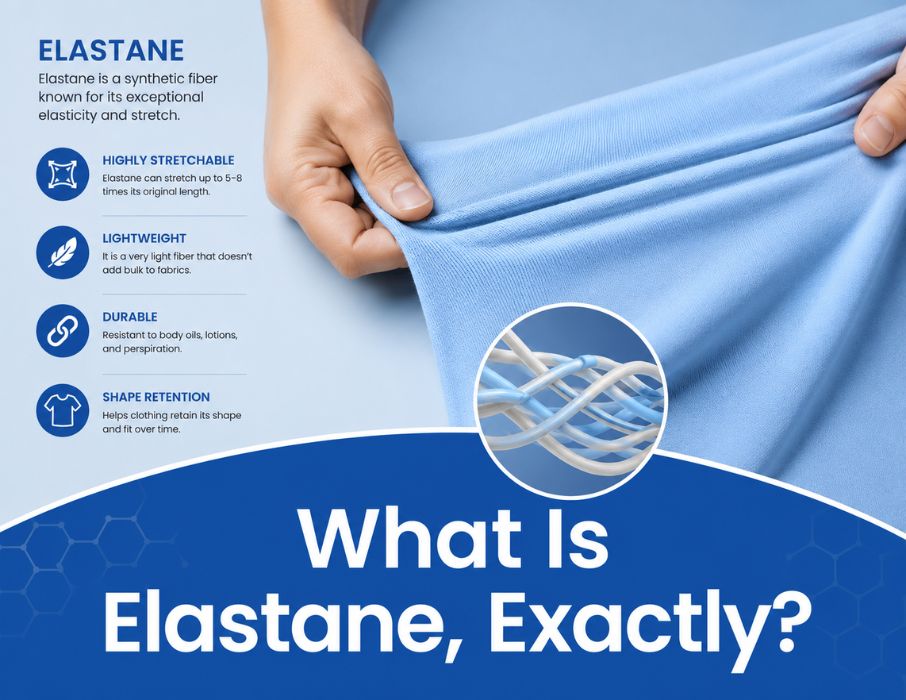
Elastane is a man-made fiber. Scientists call it an elastomeric fiber. That’s a fancy word for one simple idea. It stretches a lot. Then it snaps back to its original shape.
Natural fibers grow from plants or animals. Elastane does not. It comes from a lab. It comes from a factory. It’s built from chemicals, not nature.
You rarely see 100% elastane fabric. Instead, it gets blended. Brands mix it with cotton, polyester, nylon, or rayon. Usually, it’s a small amount. Most blends use just 2% to 20% elastane. That small amount gives the whole fabric its stretch.
What Is Elastane Made Of? The Core Ingredient
At its core, elastane comes from polyurethane. This is a type of plastic polymer. It has two parts working together.
- Hard segments give the fiber strength.
- Soft segments let it stretch. Some elastane can stretch 5 to 8 times its normal length.
This mix is what makes elastane special. Compare it to polyester or nylon. Those fibers stretch very little. They don’t bounce back the same way either.
To make this polymer, factories use a few key ingredients:
- Macroglycol (a long-chain polyester or polyether)
- Diisocyanate (a reactive chemical)
- Diamine (used to help the chain grow)
These chemicals react together. This creates a prepolymer. Factories then turn this prepolymer into thin, stretchy threads. Those threads become elastane yarn.
How Is Elastane Manufactured?
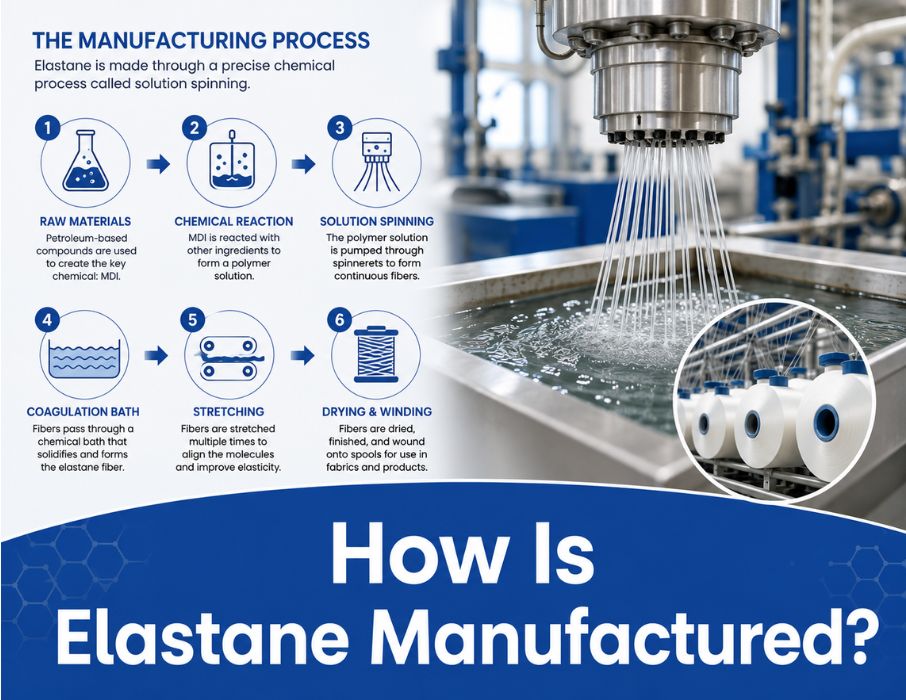
Now let’s look at how factories turn chemicals into fabric. There are four main ways to do this.
1. Dry Spinning (Most Common Method)
This is the top method. Factories push the prepolymer through a tool called a spinneret. This happens inside a hot chamber. The heat removes the solvent. What’s left hardens into fine threads.
Workers twist these threads together. This forms elastane yarn. About 95% of the world’s elastane comes from this method.
2. Melt Extrusion
Here, factories heat the polymer until it melts. Then they push it through a spinneret. It cools and hardens into fiber. This method is fast. But it’s less common for top-quality elastane.
3. Wet Spinning
In this method, the polymer goes into a chemical bath. It hardens through a chemical reaction. It doesn’t rely on evaporation like dry spinning does.
4. Chemical (Reaction) Spinning
This method is rare. The polymer forms right during the spinning step itself.
Once the elastane thread is ready, it needs a partner fiber. Factories wrap it with cotton or polyester threads. This process is called core-spinning or covering. The result is the stretchy fabric used in your clothes.
Spandex vs. Lycra vs. Elastane: What’s the Difference?
This question comes up a lot. Here’s the simple answer.
- Elastane is the general name. People in Europe, Asia, and Australia use this word.
- Spandex is the same fiber. People in North America just call it something different.
- Lycra is a brand name. The Lycra Company owns it. DuPont first created it back in 1958.
So if your tag says “Lycra,” don’t worry. It’s not a different fabric. It’s just a name-brand version of elastane.
Why Elastane Is Essential in Sportswear and Activewear
Sportswear brands depend on elastane. Here’s why it matters so much:
- Shape retention. Clothes keep their shape. Even after washing. Even after hard workouts.
- Muscle support. Compression leggings use elastane blends. They support your muscles. They help you recover faster.
- Freedom of movement. Athletes need fabric that moves with them. It shouldn’t hold them back.
- Comfort on skin. Elastane blends hug your body. They don’t feel stiff.
- Durability. Good elastane resists pilling. It handles sweat and friction well.
This is why running leggings, compression shirts, and swimwear almost always use an elastane blend. Pure cotton or plain polyester just can’t do the job alone.
Is Elastane Safe and Sustainable?
Many people ask if elastane is safe. Let’s cover both skin safety and the environment.
For your skin: Elastane is usually safe. Most people don’t react to it. But it doesn’t breathe well on its own. That’s why brands mix in only a small amount.
For the environment: Elastane comes from petroleum. That means it won’t break down naturally. It can also shed tiny microplastics during washing. This happens with polyester and nylon too.
Because of this, some sportswear brands are changing. They now use recycled elastane. Some brands test bio-based alternatives. This helps reduce harm to the planet.
Our Popular Topics
- Read Also : What Is Elastane Fabric?
- Read Also : How to Make Embroidery Stitches Not Slip – Easy Fix
Read Also : What Are Softshell Jackets?
Elastane Fabric Care Tips
Elastane loses its stretch under heat. It also weakens from chlorine and harsh soap. Follow these tips to make your gear last longer:
- Wash in cold or lukewarm water.
- Skip the high-heat dryer setting.
- Don’t use fabric softener or bleach.
- Let compression wear and swimwear air-dry when you can.
Final Thoughts
So, what is elastane made of? At its heart, it’s a man-made polyurethane fiber. Scientists built it for one job: to stretch and bounce back. It’s not a natural fiber. It’s a chemical breakthrough.
You may call it elastane, spandex, or Lycra. It doesn’t matter. This one fiber changed modern clothing forever. It’s especially important in sportswear, where movement and comfort matter most.
Next time you put on leggings or compression shorts, you’ll know the secret. That perfect stretch comes from elastane.
FAQs
Is elastane the same as spandex?
Yes. Elastane and spandex are the same fiber. People outside North America say “elastane.” People in the U.S. and Canada say “spandex.”
Is Lycra better than regular elastane?
Lycra is a branded version of elastane. The Lycra Company controls its quality closely. It often lasts a bit longer. But at its core, it’s the same fiber.
Can elastane fabric be 100% pure?
Not usually. Pure elastane fabric would be too thin and unstable. That’s why brands always blend it with cotton, polyester, or nylon.
Does elastane shrink in the wash?
Elastane itself doesn’t shrink. But heat can damage its stretch. Over time, this makes clothes feel looser and less supportive.