
lipping stitches are annoying. You stitch carefully. Then loops loosen. Threads pull out. Fabric puckers after a wash. The good news? Stitch slippage has fixable causes.
These include thread tension, fabric stability, needle choice, and stitch technique. Below, you’ll learn why stitches slip. You’ll also learn how to stop it for good.
Why Embroidery Stitches Slip
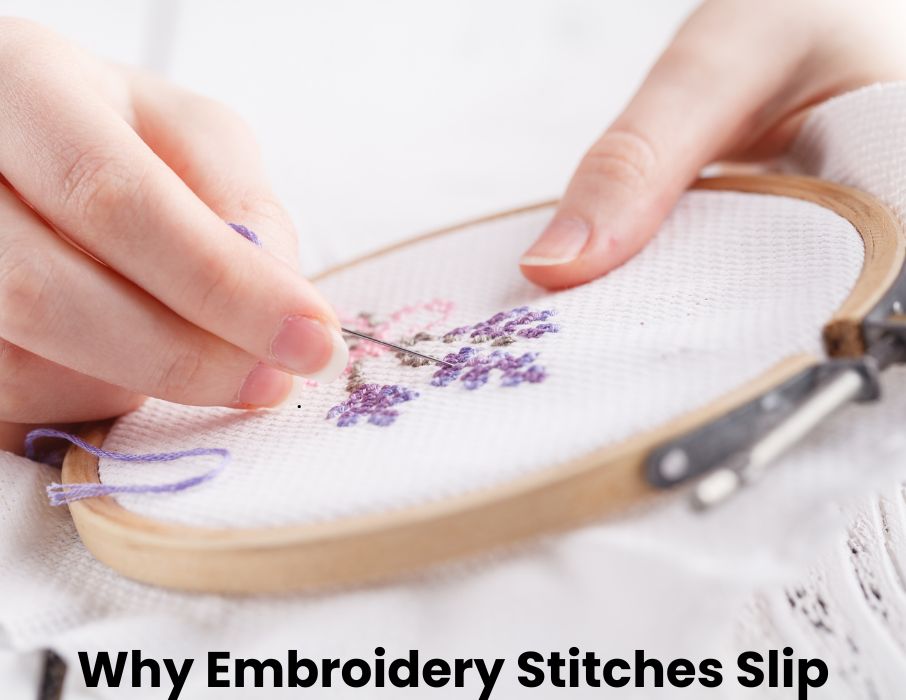
Stitches slip for a few main reasons. Let’s break them down.
- Wrong thread tension. Too loose, and loops won’t hold. Too tight, and fabric puckers. Both weaken your stitch over time.
- Unstable fabric. Loose fabrics like linen stretch under the needle. So do knit fabrics. This lets stitches shift.
- Wrong needle size. A big needle makes a big hole. Stitches can slide right through it.
- Weak knots. A loose knot won’t hold. Stitches unravel fast.
- Slippery thread. Rayon and silk slide more than cotton. They need extra securing.
Once you know the cause, you can fix it.
1. Stabilize Your Fabric First
Stabilizer keeps stitches in place. This matters most for machine embroidery. Use cut-away stabilizer for stretchy fabric. Use tear-away stabilizer for stable fabric.
For hand embroidery, hoop your fabric tight. A loose hoop lets fabric shift. That’s a top cause of loose stitches.
2. Use a Lock Stitch or Knot
Skip the simple knot. It can slip through the weave over time. Use a lock stitch instead. Take two tiny stitches in the same spot. Do this before you start your pattern. This locks the thread in place. No bulky knot shows on the front.
Read More : Discover the perfect drop shoulder rhinestone t-shirts and bring a luxurious streetwear touch to your custom fashion collection.
3. Match Your Needle to Your Thread
A needle that’s too thick leaves a big hole. Stitches slide and loosen over time. The rule is simple: pick a needle just slightly bigger than your thread.
Use size 7 to 10 for fine thread like silk or cotton floss. Size up for thicker thread like pearl cotton.
4. Fix Your Thread Tension
Check your bobbin tension often. A loose bobbin is the top cause of loopy stitches on the back of your fabric. For hand embroidery, pull thread with even pressure. Too hard, and stitches twist. Too soft, and stitches sag.
5. Pick the Right Stitch
Some stitches hold tighter than others. Backstitch and stem stitch overlap each new stitch. This makes them strong. Running stitch is weaker. It works loose stitch by stitch. Use backstitch or satin stitch on areas with heavy wear, like cuffs or collars.
6. Secure Your Thread Ends
Don’t leave loose thread tails. Weave each end through the back of your stitches. Cover at least half an inch. This spreads the tension across many stitches. One knot alone can’t do that. This step cuts slippage after washing.
7. Add Light Fusible Interfacing
This step helps garments that get worn and washed a lot. Iron light fusible interfacing onto the back of the fabric. Do this before you stitch. It adds a layer of support. Your stitches stay locked in place, even as the fabric moves.
Read More :For winter sports brands, our ski & snowboarding pants combine waterproof protection with breathable comfort, built for extreme alpine performance.
Final Thoughts
Slipping stitches don’t mean you lack skill. They point to a fixable problem: weak stabilization, bad tension, or loose thread ends. Stabilize your fabric.
Pick the right needle and thread. Lock your stitches the right way. Secure your thread ends well. Do this, and your embroidery will stay tight and strong for years.
FAQs
Why do my embroidery stitches keep coming loose?
Most loose stitches come from weak tension, unstable fabric, or a poor knot. Fix one of these, and the problem often goes away.
What stabilizer works best to stop stitches from slipping?
Use cut-away stabilizer for stretchy or knit fabric. Use tear-away stabilizer for stable woven fabric.
Does needle size really affect stitch slippage?
Yes. A needle too big leaves a hole too big. The stitch can slide right through it. Match your needle size to your thread.
How do I lock a stitch without a bulky knot?
Take two small stitches in the same spot before you start your pattern. This holds the thread without adding bulk on the front.
Will washing make my embroidery stitches slip more?
It can, if your thread ends aren’t secured well. Weave thread ends through the back of your stitches for at least half an inch to prevent this.