
You typed “how much is an embroidery machine” into Google. You want a clear number. Here is the honest answer: it depends on the machine type.
A basic home embroidery machine can cost $200. A commercial multi-head machine can cost $20,000 or more. That is a huge gap. A home hobbyist and a big apparel factory do not buy the same tool.
This guide shows real embroidery machine prices by type. It explains what makes the price go up or down. It also helps you decide between buying a machine and using a manufacturer instead.
Embroidery Machine Price Ranges at a Glance
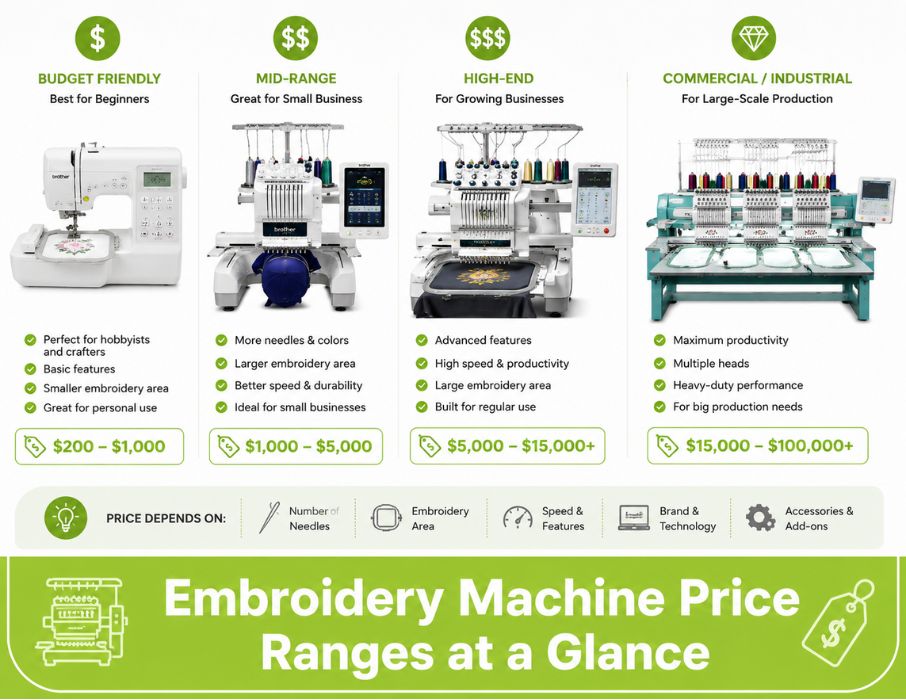
Here are the price ranges for 2026:
- Entry-level home machines: $200 – $800
- Mid-range single-needle machines: $800 – $3,000
- Multi-needle home or small business machines: $3,000 – $8,000
- Single-head commercial machines: $5,000 – $12,000
- Multi-head industrial machines: $10,000 – $50,000+
These prices cover the machine only. They do not cover software, thread, backing, hoops, repairs, or training. Those add real cost too.
What Changes the Price of an Embroidery Machine?
1. Needles and Heads
A single-needle machine holds one thread color. The operator must stop and change thread for each new color. This takes time.
A multi-needle machine holds many colors at once. It works faster. It also costs more.
A multi-head machine stitches the same design on many garments at the same time. Factories use these to fill big orders fast.
2. Embroidery Field Size
The embroidery field is the space where the machine can stitch. A small field works for a logo on a cap. A large field works for a design on a jacket back or a full jersey. Bigger fields cost more.
3. Stitch Speed
Machines are rated by stitches per minute, or SPM. Home machines run at 400 to 800 SPM. Commercial machines can run past 1,200 SPM. Faster machines finish bulk orders sooner. They also cost more and need more upkeep.
4. Software and Digitizing
Digitizing turns artwork into a stitch file the machine can read. Some machines come with basic software. Others need a separate digitizing tool or a trained digitizer. Good digitizing means clean, sharp embroidery. Bad digitizing means loose stitches and thread breaks.
5. Brand and Build Quality
Known brands like Tajima, Barudan, and ZSK cost more. They last longer and break down less. Cheap machines look similar on paper. But they often struggle with tension and thread breaks on long runs.
Home Machine or Commercial Machine: Which Do You Need?
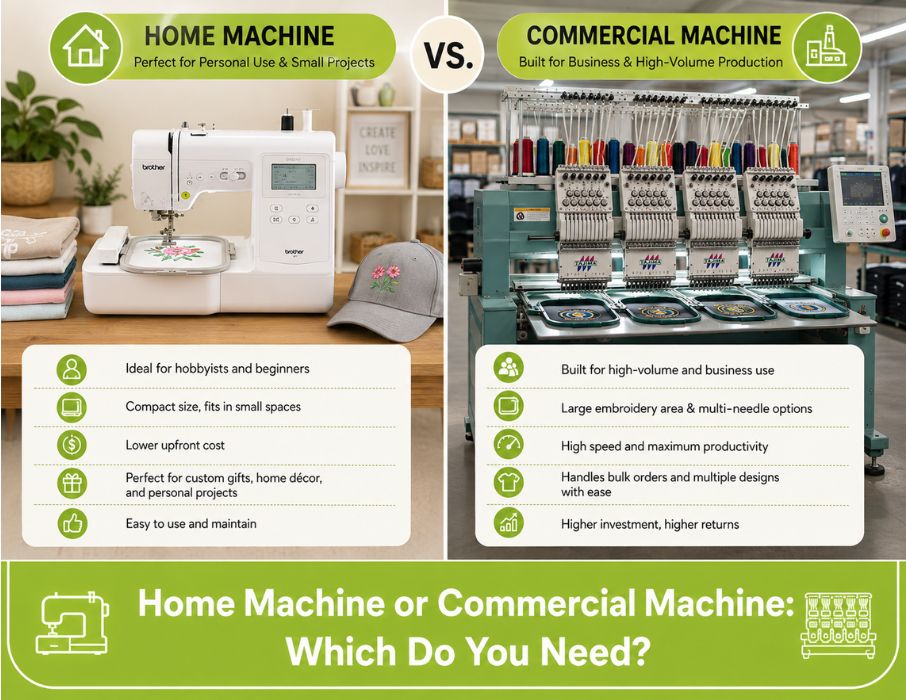
Do you embroider a few items a month? A gift here, a small batch there? A home machine between $500 and $2,000 is enough.
Do you run a brand, a team, or a streetwear label? Do you need hundreds or thousands of clean logos each month? Then a machine alone will not solve your problem. You also need:
- A trained digitizer
- Regular machine upkeep and spare parts
- Skilled operators
- Space for production and quality checks
- A backup plan for rush orders
Many brands hit this wall. The machine may cost $15,000. But building a real embroidery team around it can cost far more in time and mistakes.
Why Many Brands Skip Buying a Machine
Startups and sportswear brands often skip the machine. They send their logo to a factory instead. The factory already owns the machines. It already has a digitizing team. It already runs quality checks.
This is where a manufacturer like Core Sportswears fits in. Core Sportswears works from Sialkot, Pakistan, a region known for sportswear production. The factory runs its own computerized embroidery machines. It also runs sublimation printing, cutting, and stitching lines. Brands send their artwork. They get back finished, embroidered jerseys, jackets, hoodies, and caps. Core Sportswears also offers a trial sample with no minimum order.
So instead of pricing out a $15,000 machine, a brand can send one file and get a real sample in days.
- Read More : How to Make Embroidery Stitches Not Slip
- Read More : What Is Elastane Fabric?
- Read Also : What Is Elastane Made Of?
How to Decide: Buy a Machine or Use a Manufacturer?
Ask yourself these questions:
- How many pieces do I need each month? Under 50 pieces favors a home machine. Over 500 pieces favors a manufacturer with multi-head machines.
- Do I have a digitizer? If not, plan for $30 to $100 per design, or pick a manufacturer that includes it.
- Can I handle downtime? One home machine breaking down stops your whole order. A factory runs many machines. One issue will not stop your run.
- Do I need speed? A factory with in-house embroidery, printing, and stitching can move from sample to bulk in days, not months.
Conclusion
So, how much is an embroidery machine? A basic home model starts at $200. A full industrial system can pass $50,000. The real price depends on needle count, speed, field size, and brand.
But the machine price is only part of the cost. Digitizing, upkeep, staff, and training all add up.
A home machine works well for a hobby. A brand that needs steady, high-volume embroidery gains more from a manufacturer like Core Sportswears. No machine to buy. No digitizer to hire. Just finished, export-ready garments.
FAQs
Q1: What is the cheapest embroidery machine?
Basic single-needle home machines start at $200 to $300. Most solid beginner models cost $400 to $800.
Q2: How much does a commercial embroidery machine cost?
Single-head commercial machines cost $5,000 to $12,000. Multi-head industrial machines cost $10,000 to $50,000 or more.
Q3: Is it cheaper to buy a machine or use a manufacturer?
For low volume, a home machine is cheaper. For medium to high volume, a manufacturer often costs less once you add digitizing, upkeep, and staff.
Q4: Do embroidery machines need special software?
Yes. Machines need digitizing software to read a design. Some machines include basic software. Full digitizing is often a separate cost or service.
Q5: Can a manufacturer embroider my logo without me owning a machine?
Yes. A manufacturer like Core Sportswears can stitch your logo onto garments, bags, and caps. You do not need to own or run any machine.