
Picking the right manufacturer matters a lot. It can make your brand or break it. This is true for streetwear labels. It is true for private label activewear lines. It is true for team uniforms too. Your manufacturer sets your product quality. They control your delivery speed. They shape your profit margin.
This guide is for USA brand owners. It covers custom clothing manufacturers. It covers private label clothing manufacturers. It covers kids clothing manufacturers too. You will also learn why many brands now look past local factories. They choose trusted overseas partners instead. One example is Core Sportswears.
Why Brand Owners Search for Clothing Manufacturers in the USA
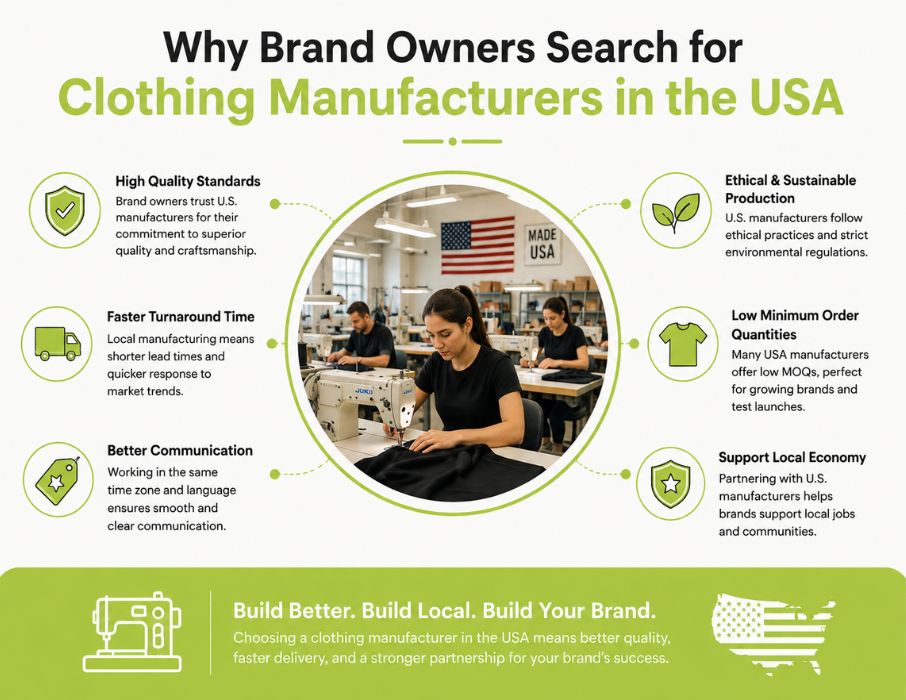
Most new brand owners start with one search. They type “clothing manufacturers in USA.” This makes sense at first. Local sourcing feels safe. Talking to a local factory feels easy. Shipping looks fast too.
But brands soon hit three problems.
- High minimum order quantities (MOQs). Many local factories only take bulk orders. That is risky for a new brand.
- Higher costs. Labor costs more in the USA. Fabric costs more too. So each unit costs more to make.
- Limited customization. Small local shops often can’t do advanced embroidery. They struggle with big printing jobs. Complex tech packs can be hard for them too.
This is why many brand owners look wider. They search for skilled overseas manufacturers. These factories serve US brands directly. Many offer low or no MOQ on trial samples. They ship finished goods ready for retail. A factory does not need to sit in the USA to serve US brands well. What matters most is trust. Quality control matters too. So does clear communication.
What Makes a Good Custom Clothing Manufacturer
Not every factory that says “custom manufacturer” can deliver. Check these points first.
In-house production. Look for a factory with its own cutting team. It should have its own stitching unit. It should run its own printing and embroidery too. This gives better quality control. It also means faster turnaround. Core Sportswears runs over 200 machines in-house. This includes flatlock and overlock machines. It includes single-needle and bar tack machines. It also includes computerized embroidery and sublimation printing.
Sample-first approach. A good factory lets you test first. They send a trial sample before bulk production. No-MOQ sampling protects new brands. It saves you from wasted money.
Tech pack support. You should be able to send a tech pack. You can send a logo or a rough sketch too. The factory should turn this into a real sample fast.
Clear turnaround times. Good factories give clear timelines. Samples often take 5 to 7 days. Bulk orders often take 15 to 25 days. Watch out for vague promises.
Export experience. Pick a factory with real export history. They should know shipping paperwork well. They should have global shipping partners. This lowers your risk of customs delays.
Private Label Clothing Manufacturers: Building Your Own Brand
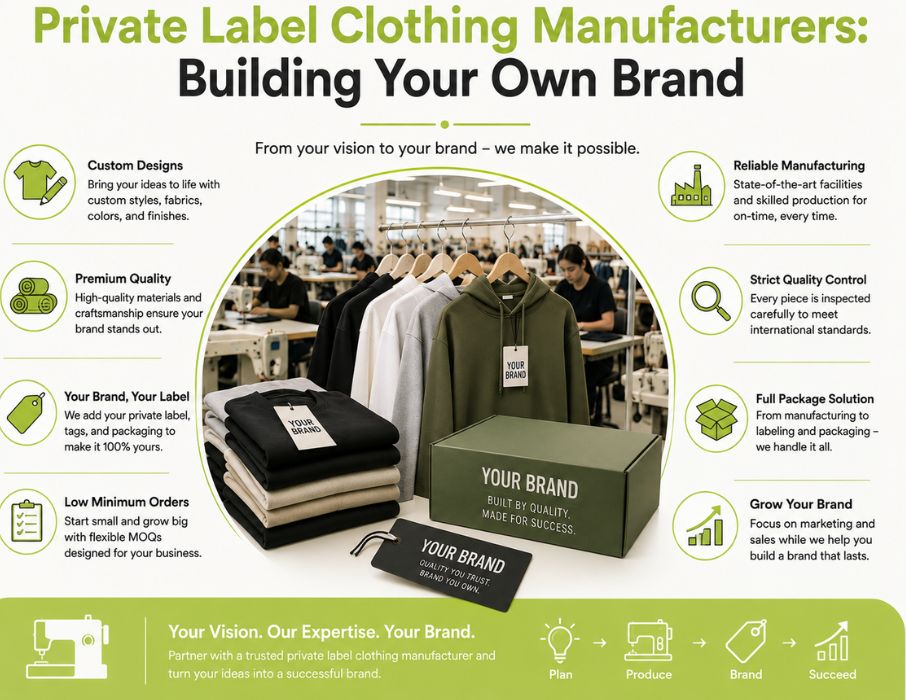
Some brand owners want their own label. They don’t want to resell generic products. This is where private label clothing manufacturers help. The factory makes the garment. But you control the brand. You choose the logo. You choose the labels. You choose the packaging. You set the price.
This model works well for many brands:
- Activewear and gym apparel startups
- Streetwear brands with a strong identity
- Sports clubs that need branded uniforms
- E-commerce sellers scaling up production
A strong private label partner offers more than sewing. They offer custom labels and tags. They offer leather patches too. They can add PVC or rubber logos. They can print custom poly bags. They can source the right fabric. One factory can handle it all. This means less stress for you. You don’t need to manage many vendors.
Kids Clothing Manufacturers: A Growing Niche
Kids clothing manufacturers face different rules. Kids’ clothes need soft, safe fabric. Kids move a lot, so seams must be strong. Small sizes need careful grading. Prints and trims must pass safety checks.
Are you entering the kids’ apparel space? Maybe you sell youth sportswear. Maybe you make kids’ streetwear. Maybe you supply youth league uniforms. Check that your manufacturer knows how to:
- Grade sizes across children’s age groups
- Pick safe, breathable, durable fabric
- Run small-batch samples to test fit
- Print and embroider designs that survive many washes
Many sportswear factories already serve adult teams. They make basketball, soccer, and running gear. These same factories can often make kids’ gear too. Their machines are the same. Their quality checks are the same. Only the sizing changes.
How the Manufacturing Process Works
Good factories follow one clear process. It stays the same for sportswear. It stays the same for streetwear. It stays the same for kids’ apparel too.
- Share your design. Send a tech pack, logo, or reference photo.
- Confirm materials. Pick the fabric, color, fit, size, and branding method.
- Sample development. The factory makes one sample for you to approve.
- Bulk production. The factory cuts, prints, stitches, and finishes at scale.
- Quality check. Every batch gets checked for stitching and fit. Print quality gets checked too.
- Packing and shipment. Your order gets packed to your rules. Then it ships out.
This clear process matters. It shows the difference between a real manufacturer and a small print shop. A small shop may not scale with your brand.
Choosing the Right Partner for Your Brand
Don’t just compare price per unit. Compare total value instead. Look at sample turnaround time. Look at fabric quality. Look at in-house branding options. Look at how fast they answer you. Look at their export track record.
A slightly higher unit price can still save you money. Fewer reorders means less cost. Fewer returns means less cost too. Fewer complaints means a happier customer base.
Core Sportswears is based in Sialkot, Pakistan. They work with brands across the USA. They also serve teams, wholesalers, and private label buyers. They offer no-MOQ trial samples. They run in-house printing and embroidery. They ship export-ready orders. This covers sportswear, streetwear, kids’ apparel, and bags.
Popular Topic
- Read Also: How to Make Embroidery Stitches
- Read Also : What Is Elastane Fabric?
- Read Also: What Are Softshell Jackets?
Conclusion
You may search for custom clothing manufacturers. You may search for private label clothing manufacturers. You may search for kids clothing manufacturers. The real choice comes down to trust. It comes down to clear communication. It comes down to real production skill. Location matters less than these things.
A good manufacturer offers no-MOQ samples. They run in-house printing and embroidery. They give clear timelines. They have real export experience. Such a factory can serve USA brands well. Often, they cost less than local options. They also give growing brands more flexibility.
Before you commit to bulk production, take one step first. Request a trial sample. Review their full process. Check their export history. This one step can protect your brand from costly mistakes.
FAQs
Do I need a minimum order quantity to start?
Not always. Many good manufacturers offer a no-MOQ trial sample. This lets you test quality first. Then you can place a bulk order later.
What is the difference between private label and custom manufacturing?
Custom manufacturing means the factory builds your design. Private label goes one step further. The factory adds your labels and tags too. It adds your packaging as well. The final product looks fully like your own brand.
How long does a sample take to make?
Most good factories finish a sample in 5 to 7 days. This starts after they get your tech pack or design. Bulk production usually takes 15 to 25 days after that.
Can one factory make both adult and kids’ clothing?
Yes, in many cases. The factory needs skill in small size grading. It needs safe fabric choices too. Many sportswear factories already do both well.
Is it safe to use an overseas manufacturer instead of a local one?
Yes, if the factory has real export experience. Look for clear communication. Look for sample-based quality checks. Look for honest timelines. Many USA brands now choose overseas partners. They get lower costs. They get more production flexibility. They still get strong quality.