
Custom t-shirts are everywhere now. Brands use them. Teams use them. Event hosts use them. Even single creators use them. You start with one idea. You end with a real shirt you can wear or sell. But there is a right way to do it.
Thank you for reading this post, don't forget to subscribe!You need to pick the right fabric. You need to pick the right print method. Do this well and you avoid waste. Do this well and you get a shirt that looks and feels great.
This guide walks you through each step. It also shows you the print methods that pros use. By the end, you will know how to pick the best method for your project.
Step 1: Choose the Right Fabric and Blank T-Shirt
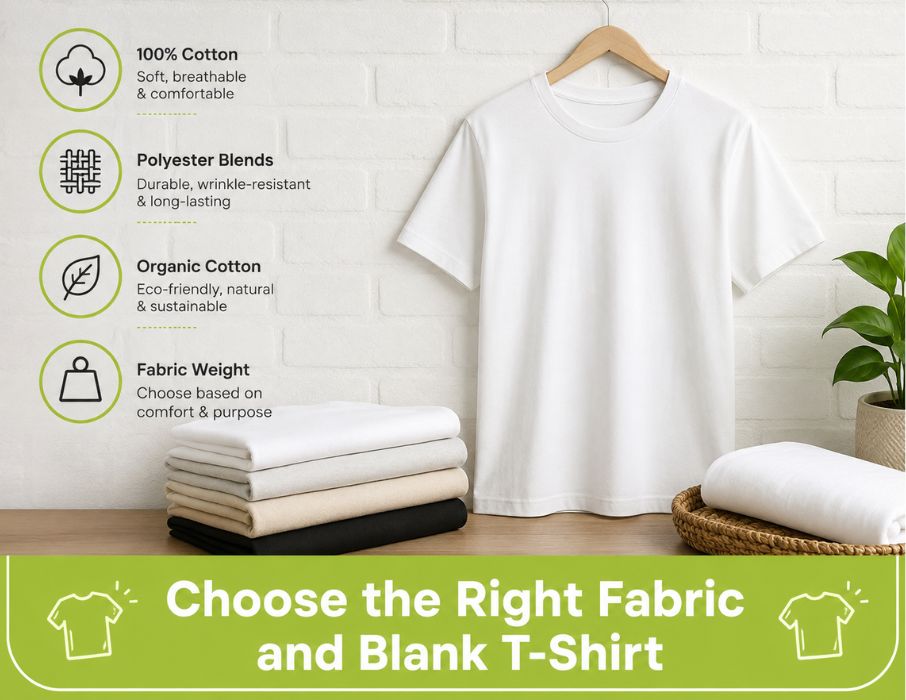
Every custom t-shirt starts with a blank shirt. The fabric matters a lot. It changes how the shirt feels. It changes how it moves on your body. It changes how well it holds print or thread over time. Here are your main options:
- 100% Cotton — Soft. Breathable. Great for everyday wear. Great for screen printing.
- Cotton-Polyester Blends — Strong and durable. Resists shrinking. Holds bright prints well.
- 100% Polyester / Performance Fabric — Best for sports gear. Pulls sweat away from skin. Resists fading. Great for sublimation prints.
- Oversized / Heavyweight Cotton — A top pick for streetwear. It has more structure. It feels premium.
Fit matters too. You can pick regular, oversized, boxy, or athletic cuts. Each fit speaks to a different buyer. Match your fit to your brand before you move to design.
Step 2: Design Your Artwork
Now it is time to build your design. Use a vector file if you can. Formats like AI or EPS work best. A high-res PNG or PSD also works. Vector files scale up or down with no blur. Keep these tips in mind:
- Use CMYK color mode. This keeps your print colors accurate.
- Keep small text and thin lines thick enough to print clean. Thin lines can crack or blur.
- Pick your placement early. Front chest? Full back? Sleeve? Your choice affects which print method works best.
Step 3: Choose a Printing or Customization Method
This step is the heart of the process. Each method has its own strengths. The best choice depends on your design, your budget, and your order size.
Screen Printing
This is the top choice for bulk orders. Ink gets pushed through a mesh screen. Each color needs its own layer. The result is bold, bright, and long-lasting. Costs drop as your order size grows. This makes it a favorite for brands and sports teams.
Direct-to-Garment (DTG) Printing
Think of this like an inkjet printer, but for fabric. It prints your design straight onto the shirt. It handles detailed art well. It handles photos well too. It suits small runs and one-off prints.
Sublimation Printing
This method dyes the fabric itself. The ink does not sit on top. It soaks into the threads. This gives a soft feel with no cracks and no peeling. It works best on polyester. It suits full, all-over designs. You will see it a lot in sportswear.
Embroidery
Use this for logos and small text. Thread gets stitched right into the fabric. It adds texture. It adds a premium look. It lasts longer than most prints. Brands love it for uniforms and clean, high-end labels.
Heat Transfer Vinyl (HTV)
This method suits small batches or single shirts. A design gets cut from vinyl. Then it gets pressed onto the shirt with heat. It costs less. It works fast. It fits personal projects best.
Step 4: Sampling and Quality Approval
Never skip this step. Always ask for a sample first. A real sample lets you check the fabric weight. It lets you check the print color. It lets you check the placement and the stitch quality.
Good manufacturers offer a trial sample even for small first orders. This way, you approve every detail before you go big.
Step 5: Bulk Production and Finishing
Once your sample gets approved, full production starts. Here is what happens next:
- Cutting — Fabric gets cut to match each size in your order.
- Printing or Embroidery — Your approved design gets applied to every piece.
- Stitching and Assembly — Panels get sewn together into finished shirts.
- Quality Control — Each shirt gets checked for stitching, print, and fabric quality.
- Labeling and Packaging — Neck labels, tags, and branded packaging get added before shipping.
DIY vs. Working With a Manufacturer
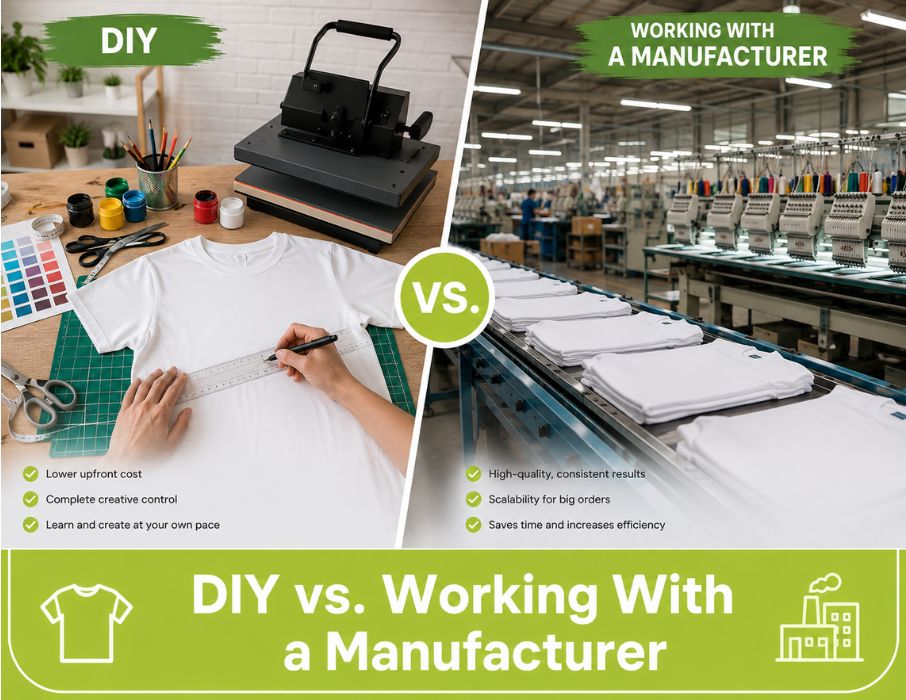
Making one shirt at home is easy. A heat press or a small DTG printer can do the job. But things get harder when you need dozens or hundreds of shirts. You need the same fabric every time. You need the same colors every time.
You need the same finish every time. That level of control is hard to reach outside a real factory. If you run a brand, a team, or a private label, you need shirts made the same way, every time.
This is where a manufacturer helps. A good partner handles your fabric sourcing. A good partner handles your print work and your stitch work too. You can see the full range of shirt styles they offer, built for bulk orders.
- Read Also : Ski & Snowboarding Pants
- Read More : How to Make Embroidery Stitches Not Slip
- Read Also : What Is Elastane Fabric?
How to Choose the Right Method for Your Order
Not sure which method fits your project? Use this quick guide:
- Small order, complex design → DTG printing
- Large bulk order, simple to medium design → Screen printing
- Sportswear with full graphics → Sublimation
- Logos or a premium finish → Embroidery
- One shirt or a small test batch → Heat transfer vinyl
Conclusion
Making custom t-shirts takes more than picking a design and hitting print. You need the right fabric. You need the right print method. You need to sample first. You need strong quality checks. Small home projects work fine with tools like heat transfer vinyl.
But brands and teams that need many shirts, made the same way every time, need a real manufacturing partner. The right partner handles your fabric, your custom finishing, and your full production run.
This turns your idea into a real product, ready for your store, your team, or your label. Want to start? Request a quote today and get your first sample moving.
FAQs
1. What is the best printing method for custom t-shirts?
It depends on your order. Screen printing works best for large orders with simple designs. DTG works best for small runs with detailed art or photos.
2. How much does it cost to make custom t-shirts?
Cost depends on your fabric, your print method, your design, and your order size. Bigger orders bring the cost per shirt way down.
3. Is there a minimum order to get custom t-shirts made?
It depends on the factory. Some offer trial samples with no minimum. This lets you test quality first, before you place a big order.
4. How long does custom t-shirt production take?
Samples often take about a week to finish. Full bulk orders often take two to four weeks, based on order size.
5. Can I get a sample before I place a bulk order?
Yes, and you should. A sample lets you check the fabric, the fit, the print, and the stitching. Do this before you commit to a full run.